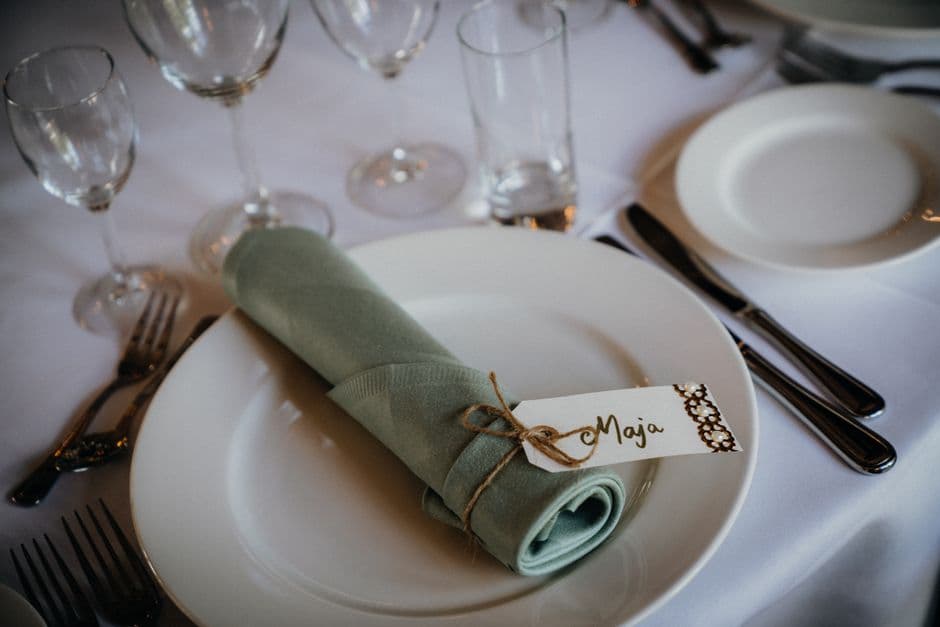
The seating chart is one of the last big planning tasks, and it can feel like a puzzle with feelings attached. It does real work, though: assigned seats help a plated dinner run on time, keep families together and make sure no guest is left wandering with a full plate. Break it into steps and it becomes much more manageable.
Decide whether you need one
Most weddings with a seated dinner benefit from a chart, and it is usually essential for a plated meal, where servers need to know who ordered what. For a casual buffet, food stations or a cocktail-style reception, you might assign tables but not seats, or reserve tables only for family and the wedding party and let everyone else choose. Ask your caterer what works best for the service style you chose.
When to start
You cannot finish the chart until RSVPs are in, but you can start earlier. Sketch rough groupings once your guest list is final, then fill in names as replies arrive. Most couples finalize the chart one to two weeks before the wedding, after chasing late RSVPs. Check your caterer's and venue's deadlines, since they often want a final count, meal selections and table assignments around the same time.
Start with the floor plan
Get a floor plan from your venue or planner showing the dance floor, bar, buffet or stations, DJ or band, exits and restrooms. Then confirm your table setup:
- Round tables usually seat 8 to 10 and make conversation easy.
- Long banquet or farm tables fit more people in a narrow space and suit barns and rustic venues, but guests mostly talk to their neighbors.
- A head table or sweetheart table for the couple. A sweetheart table seats just the two of you, while a head table includes the wedding party.
If you are bringing in tables and chairs, our rentals guide covers what to order, and your rental company can tell you how many guests each table size really fits.
Group guests before assigning tables
Instead of placing people one by one, sort your guest list into groups first: close family on each side, extended family, college friends, work friends, neighbors, family friends and so on. Then fill tables with whole groups, combining smaller groups that share something in common. A spreadsheet or a free seating chart tool makes it easy to move groups around, and sticky notes on a printed floor plan work well too.
Where to seat the important people
- Parents, grandparents and other close family near your table, with a clear view of toasts and the first dance.
- Older guests away from the speakers and close to restrooms and exits, with an easy path to their seats.
- Guests with mobility needs at tables that are easy to reach, with room for a wheelchair or walker.
- Families with young children near an exit, in case a little one needs a break.
- Your most enthusiastic dancers near the dance floor. They will help get the party started.
Handling tricky dynamics
Nearly every chart has a few sensitive spots, and a little thought keeps the day comfortable for everyone:
- Give divorced parents their own tables with their own families and partners, rather than seating them together.
- Seat guests who do not get along at different tables, ideally not facing each other.
- Place guests who know few people with friendly, outgoing tablemates who share an interest or age range.
- Avoid a "singles table" that feels like a label. Mix single guests in with groups they will enjoy.
- Seat each plus-one with the guest who brought them.
If something will be delicate on the day, such as an estranged relative, quietly let your planner or coordinator know so they can help.
Escort cards, place cards or a display
- A seating display lists guests by name or by table on a large sign, often near the reception entrance. It is easy to read and simple to update.
- Escort cards give each guest a card with their table number, usually set out on a table near the entrance.
- Place cards mark individual seats at each table. Use them if you are assigning specific seats, not just tables.
List names alphabetically by last name on a display so guests can find themselves quickly. Your stationer can design signs and cards to match your invitations; leave time for printing after the chart is final.
What your vendors need
- Caterer: table count, guests per table, meal selections by seat for a plated dinner, and dietary needs or allergies marked clearly.
- Venue and coordinator: the final floor plan with table numbers and a copy of the seating list.
- Rental company: the final number of tables, chairs and linens.
- Vendor meals: a table for your photographer, DJ and other vendors working through dinner, if their contracts include a meal.
Add the deadlines to your wedding day timeline and planning checklist, and keep a printed copy of the chart in your emergency kit in case a card goes missing.
Last-minute changes
Someone will cancel at the last minute, and someone may arrive unexpectedly. Leave one or two open seats spread across tables, decide in advance who can make changes on the day, and choose a display or cards that are easy to edit. A good coordinator can handle these small fixes quietly so you never hear about them. If you would like help with the floor plan and the details, you can browse planners and day-of coordinators or search the directory by city.