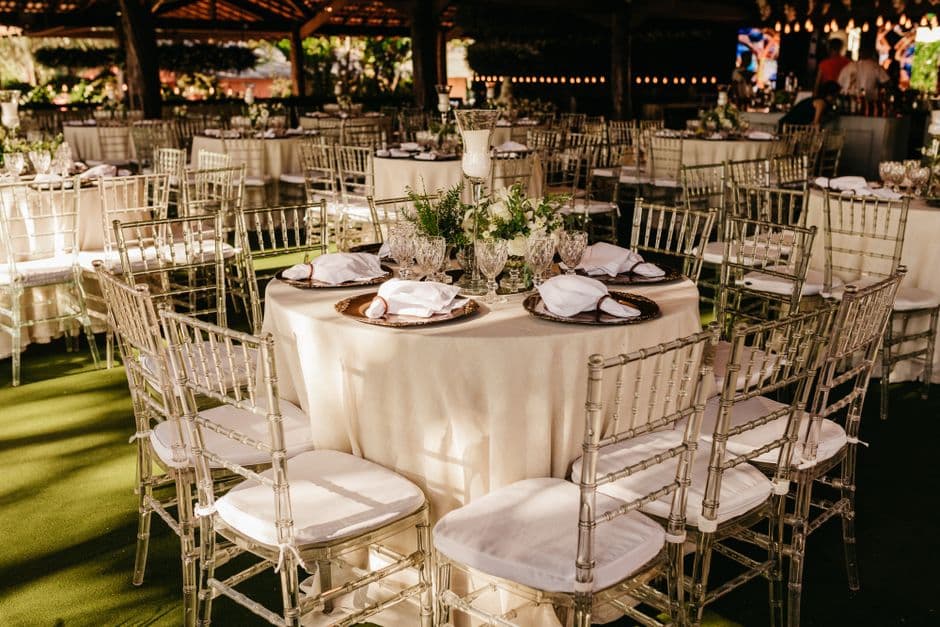
Rentals are one of those wedding line items that look simple until you start counting forks. Whether your venue includes almost everything or hands you an empty barn and a field, a clear rental plan saves money, prevents last-minute scrambles and makes setup day calmer for everyone. Here is how to work out what you need and avoid the details that most often trip couples up.
Start with what your venue includes
Venues fall along a spectrum. All-inclusive spaces may provide tables, chairs, linens and place settings, while blank-slate venues such as farms, barns and private estates provide the space and little else. Before you request a rental quote, get a written list of what your venue includes, how many of each item it has, and any rules about outside rentals, delivery times and setup. Our list of questions to ask a wedding venue covers what to confirm.
If your caterer supplies dinnerware, glassware or linens, coordinate with them first so you don't pay twice. Many caterers either include these items or order them from a rental partner they already work with.
The core rental list
Most rental orders are built from the same building blocks. Use this as a checklist, then cross off whatever your venue or caterer already covers:
- Seating and tables: guest tables, ceremony chairs (and whether they will be flipped to the reception), a head or sweetheart table, and cocktail tables.
- Linens: tablecloths, napkins and any runners or overlays.
- Tableware: plates for each course, flatware, water and wine glasses, plus coffee cups and dessert plates if you need them.
- Service pieces: bar setups, buffet tables, chafing dishes and serving pieces if your caterer doesn't bring them.
- Atmosphere: lounge furniture, a dance floor, lighting, a ceremony arch and signage.
- Comfort and infrastructure: fans or heaters, a tent, restroom trailers and a generator for sites without enough power.
Counting: the tables nobody remembers
Guest tables are easy to count. The ones that get forgotten are the extras that every reception needs, so add these before you finalize:
- Welcome or escort card table, guest book table and a gift and card table
- Cake or dessert table, plus a table for favors if you are giving them
- A table for the DJ or band, and one for the photographer and videographer to set gear on
- Vendor meal seating, if your contracts include meals for vendors working through dinner
- A few spare chairs and place settings, because last-minute plus-ones and broken glasses both happen
When choosing linens, measure from the tabletop to the floor. A tablecloth that reaches the floor on all sides needs to be the table's width plus twice that drop; your rental company can tell you which sizes fit their tables. Ask whether round tables are 60 or 72 inches across, because it changes both how many guests fit and which linens you need.
Delivery, setup and pickup windows
Rental logistics are where surprise fees tend to appear. Ask each company for its delivery and pickup windows in writing, and compare them with your venue's access hours.
- Who sets up? Some quotes include delivery only; others include setting tables, chairs and linens. Know which you are paying for.
- Access and distance: stairs, long walks from the truck, soft ground and tight driveways can add labor charges.
- Weekend timing: late-night, Sunday or holiday pickups may cost extra, and some venues require everything to be out the same night.
- Who breaks down? Clarify whether dishes need to be scraped or rinsed, linens bagged, and chairs stacked before pickup, and who on your team will handle it.
Put every delivery and pickup on your wedding day timeline and share it with your venue and planner, so trucks are not arriving while guests are.
Power, restrooms and weather at outdoor sites
Open-field and barn weddings need a few infrastructure checks that indoor venues handle for you. Ask your caterer, band or DJ and lighting vendor how much power they need, then confirm with your venue whether existing outlets can handle it or whether you need a generator, and who will run it during the event.
If permanent restrooms are limited, a restroom trailer makes a real difference to guest comfort. North Carolina weather adds another layer: fans and shade for summer afternoons, heaters for cool evenings, and a tent with sidewalls for rain. Our guide to planning a tent wedding goes deeper on tents, flooring and lighting.
Read the rental contract closely
Rental agreements are usually short, but a few clauses matter. Before you sign, check:
- The deposit amount, when the balance is due, and the deadline for changing your final counts
- Whether a damage waiver is offered or required, and what it does and does not cover
- How missing or broken items are counted and charged after the event
- Delivery, setup, labor and after-hours fees, listed separately from the items
- The cancellation and weather policy, especially for tents
Our guide to reading a wedding vendor contract walks through the general clauses to look for, and building a wedding budget helps you decide where rentals fit.
Finding the right rental partner
A good rental company will visit or know your venue, flag what you have missed and coordinate directly with your caterer and planner. Book them several months ahead, and earlier for peak spring and fall weekends. You can browse rental and decor companies in the directory, compare them with planners who manage rental orders for you, or search by city to see who serves your venue.