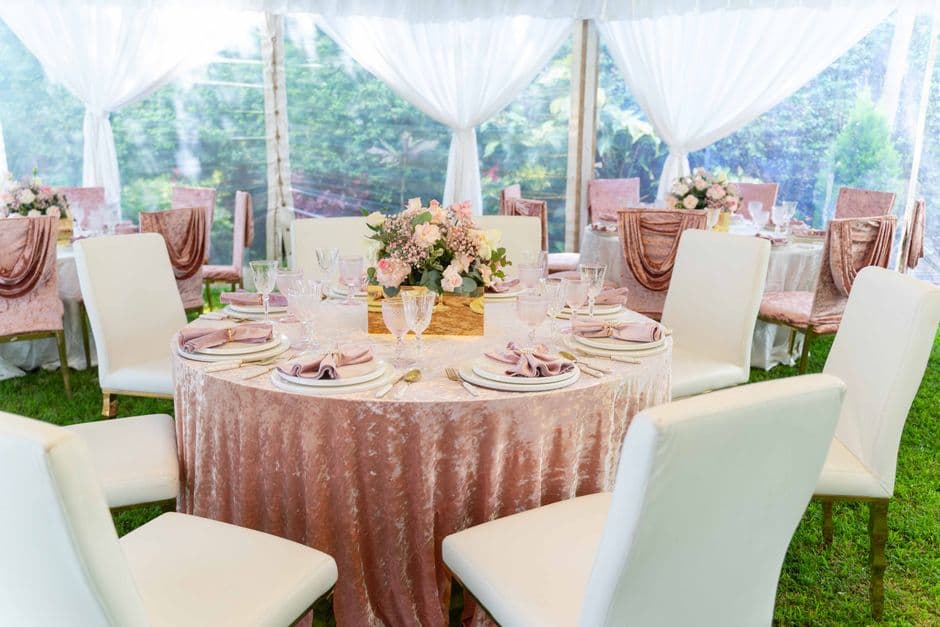
A tent can turn a family farm, a backyard or an open field into a wedding venue, and it gives any outdoor celebration a solid answer to the question every North Carolina couple eventually asks: what if it rains? It also adds a layer of planning that a full-service venue would otherwise handle for you. Power, flooring, lighting, restrooms and permits all become your project. None of it is difficult, but it goes much more smoothly when you know what to ask early.
Choosing a tent style
- Pole tents have the classic peaked look and are held up by center and perimeter poles staked into the ground. They need soft ground for staking and space around the edges for ropes, and the center poles will sit inside your layout.
- Frame tents are supported by a metal frame, with no center poles. They can go on grass, gravel or pavement, often using weights instead of stakes, which makes them useful for driveways, patios and tight sites.
- Sailcloth tents use a translucent fabric and wooden poles for a softer, glowing look at night. They tend to come at a higher price and from a smaller number of suppliers.
- Clear-top tents show off the sky and string lights, but can trap heat on a sunny afternoon. They are often a better fit for evening events and cooler months.
A rental company will walk the site with you and recommend what fits the ground, the slope and the look you want.
Sizing the tent
Tent size is driven by everything that needs to fit underneath, not just the number of guests. Make a list before you request quotes:
- Dinner seating: round tables, long banquet tables or a mix, plus space between them for servers and guests.
- A dance floor and a spot for the DJ or band.
- Bars, a cake table, a gift and card table, and any lounge furniture.
- Buffet or food stations, if your caterer is serving that way, plus a separate catering prep area, often a smaller tent nearby.
- Whether the ceremony will happen under the same tent if it rains, which may mean flipping the space mid-event.
Share the list and your guest count with your rental company and ask for a layout drawing. It is the easiest way to see whether everything really fits.
What else to rent
A tent is a roof. Almost everything else that a venue normally provides has to come in too:
- Power: generators or a confirmed electrical supply sized for lighting, music, catering equipment and any heaters or fans. Ask where a generator will sit so its noise stays away from the speeches.
- Lighting: string or bistro lights, uplighting and lighting for paths to restrooms and parking.
- Flooring: a dance floor at minimum, and possibly a subfloor if the ground is uneven or likely to be wet.
- Sidewalls: clear or solid walls you can drop for wind, rain or cold.
- Climate control: fans or air conditioning for summer, heaters for late fall.
- Restrooms and water: restroom trailers or portable units if the site does not have enough facilities, and water access for the caterer.
These items often add up to more than the tent itself, so ask for them all on one quote. Our vendor cost guide explains what drives rental pricing.
Planning for North Carolina weather
A tent is your weather plan, so plan the tent around the weather. Summer heat and humidity can make a closed tent uncomfortable, so think about airflow, fans or cooling and leaving the sides open when you can. Pop-up thunderstorms are common on summer afternoons across much of the state, which is a good reason to have sidewalls on site and to talk through how water will drain away from the tent. In the mountains, evenings can turn cool even in summer, and in late fall you may want heaters.
On the coast and in other exposed spots, wind is the bigger concern. Tents have wind limits, so ask your rental company what theirs are and what happens if a storm is forecast. During hurricane season, which runs from June 1 through November 30, make sure the contract spells out the plan if a named storm threatens your date. Our posts on heat and storms at outdoor weddings and hurricane season on the coast go deeper.
Permits, site rules and timing
Many North Carolina cities and counties require a permit, and sometimes a fire marshal inspection, for event tents over a certain size, and the rules vary from place to place. Rental companies often handle this, but confirm who is responsible and build the inspection into the setup schedule. If you are using a private property, also check for any HOA or neighborhood rules, noise ordinances and limits on parking along the road.
- Before staking, the ground needs to be checked for buried utilities. North Carolina's 811 service handles utility location requests, and many rental companies arrange it for you.
- Ask how many days the installation and removal take, and whether the tent can go up early enough for a rain-plan walkthrough.
- Check what insurance the rental company carries, and whether the property owner needs to be added or needs event insurance of their own.
For the rest of your vendor team, our vetting checklist and contract guide apply to rental companies too. Start with rentals and decor companies near your site, or look for venues with outdoor ceremony space and farm venues that already have a tent site and power in place.