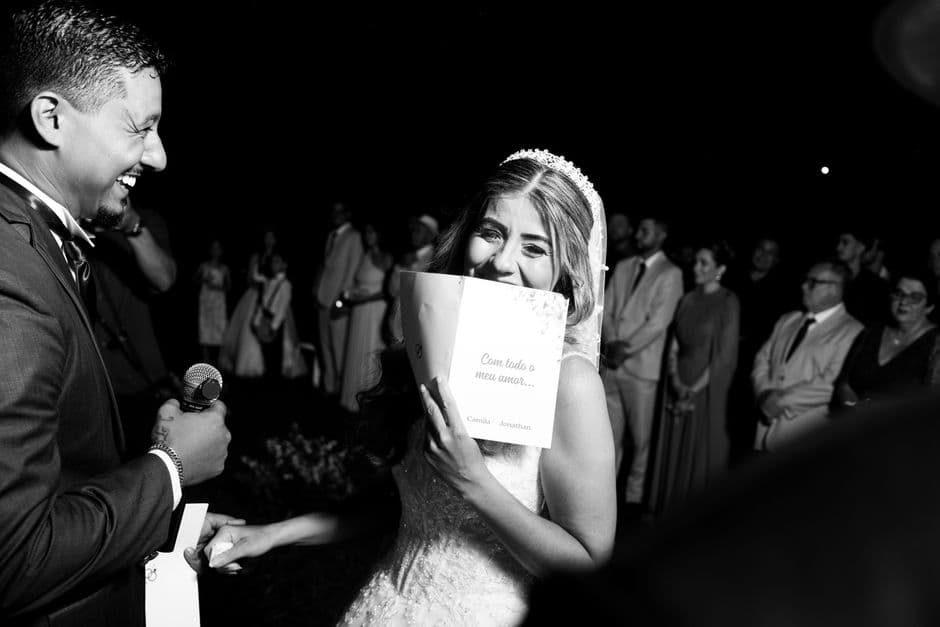
Writing your own vows can feel like a lot of pressure. You want them to be meaningful, but you also have to read them aloud in front of everyone you know. The good news is that the best vows are rarely the most polished. They are honest, specific and short enough to say without rushing. Here is how to write them without the stress.
Decide together first
Before you write anything, agree on a few things with your partner:
- Whether you are both writing personal vows, or using traditional vows, or a mix of the two
- A rough length, so one set does not run three times longer than the other
- The tone, such as heartfelt, lighthearted or somewhere in between
- Whether you will share them with each other before the wedding or keep them a surprise
Then check with your officiant. Some religious ceremonies have required vows or guidelines for personal ones, and your officiant can tell you where vows fall in the ceremony and how long they should be. Our guide to choosing an officiant covers what to ask.
How long should vows be?
About one to two minutes each is a good target, which is roughly 150 to 300 words when read at a relaxed pace. That is long enough to say something meaningful and short enough to keep guests engaged, especially at an outdoor ceremony in summer heat. Read your draft aloud and time it.
A simple structure
If you do not know where to start, this outline works for almost everyone:
- Open with something about your partner: what you love about them, or a moment when you knew.
- Share a short story or detail: one specific memory says more than a list of adjectives.
- Make your promises: three to five, mixing a few serious ones with something lighter or personal.
- Close with a line about the future: something simple you can say while looking at them, not your paper.
Prompts to get you started
- When did you first know this was the person you wanted to marry?
- What does your partner do that makes ordinary days better?
- What have you learned from them?
- What has your relationship been through together, and what did it show you?
- What do you want your life together to look like in ten or twenty years?
- What everyday promise would make them laugh, such as always letting them pick the music on road trips?
Write rough answers first, without worrying about wording. Then pick the strongest details and shape them into the structure above.
What to avoid
- Inside jokes most guests will not understand. One is fine; several will lose the room.
- Stories about past relationships or anything that might embarrass your partner or family.
- Promises you do not mean or cannot keep.
- Copying vows you found online. Borrowing a line or a reading is fine, but make the rest your own.
Give yourself time
Start about two months before the wedding so you are not writing the night before. Put a reminder in your planning timeline, write a first draft, set it aside for a few days and come back with fresh eyes. If you are stuck, a close friend or your officiant can be a good sounding board.
Delivering your vows
- Practice out loud several times, including once in front of someone you trust.
- Print your vows in a large font or write them in a vow book. Avoid reading from a phone, which looks less personal in photos.
- Give the vows to your officiant or a member of the wedding party to hold until the ceremony. Keep a backup copy in your emergency kit.
- Slow down, pause and look up at your partner. It is fine to get emotional.
- At an outdoor ceremony, make sure there is a microphone so guests can hear you. Your DJ or ceremony musicians can usually provide one.
Your videographer can record the audio clearly if you are wearing or standing near a microphone, and many couples find their vows are a favorite part of the film. Our guide to whether you need a videographer covers what to expect.
Still looking for an officiant who can help you plan the ceremony? You can browse wedding officiants or search the directory by city.