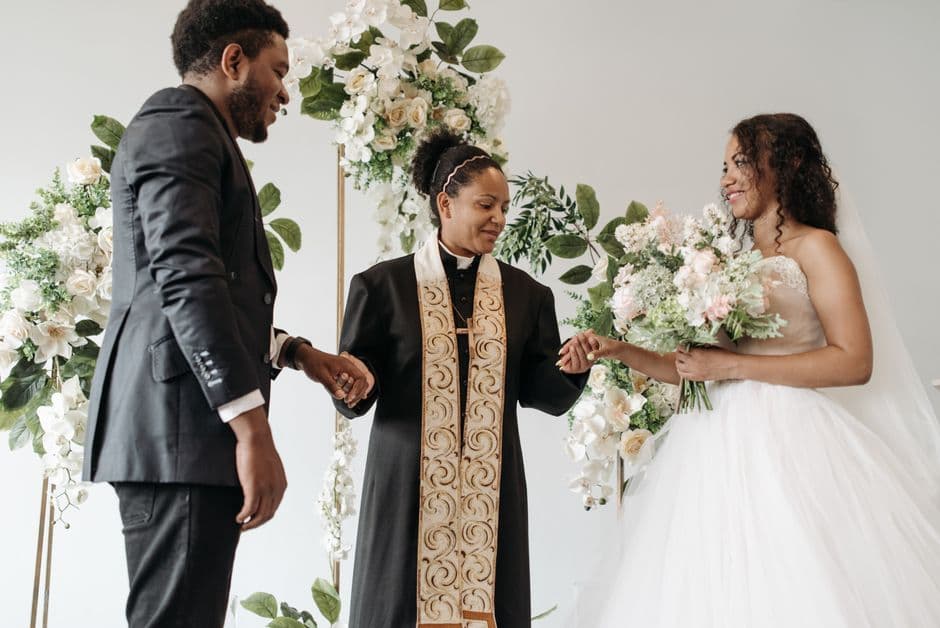
The officiant is on your vendor list for only twenty or thirty minutes of the day, but those minutes are the reason everyone came. A good officiant shapes a ceremony that sounds like the two of you, keeps it moving, and makes sure the marriage is legal when it is over. Here is how to choose one in North Carolina.
First, who can legally marry you
North Carolina law sets out who can solemnize a marriage. Under G.S. 51-1, that includes an ordained minister of any religious denomination, a minister authorized by a church, and a magistrate, and it also recognizes ceremonies carried out according to the customs of a religious denomination or a recognized Indian Nation or Tribe, such as a Quaker wedding. Our guide to North Carolina marriage license and legal basics walks through the details.
If you want a friend or relative to officiate, talk to them early about their credentials, and ask your county Register of Deeds whether they will accept them before you rely on it. It is a short conversation that avoids a very stressful surprise.
Your main options
- Clergy from your own community. A natural fit if you are part of a congregation. Ask early whether they marry couples outside their place of worship, whether they require premarital counseling, and how far they will travel.
- Professional wedding officiants. Experienced, flexible and used to writing personal ceremonies, including interfaith, secular and bilingual ones. Many are comfortable with every venue type and know the paperwork well.
- A friend or family member. Deeply personal, but it puts real responsibility on someone who may never have done it. Pair them with a clear script, a rehearsal and a plan for the paperwork.
- A civil ceremony with a magistrate. A simple, legal option, often used for elopements or as the legal step before a larger celebration. Offices set their own hours and fees, so call ahead.
You can browse officiants in the directory by city to see who serves your area.
Questions to ask before you book
- How do you approach the ceremony? Can we see a sample, and how much can we personalize it?
- Are you comfortable with our style, whether religious, spiritual, secular, interfaith or including family traditions?
- How many meetings or calls are included, and do you attend the rehearsal?
- What do you need from us for the license, and how and when will you return it after the ceremony?
- Do you have a backup officiant if you are sick or delayed, and what happens to our deposit if you cancel?
- What is your fee, what does it include, and is travel extra?
Treat the answers like any other vendor interview, and get the agreement in writing. Our list of questions for a first vendor call and guide to reading a vendor contract both apply here.
Shaping the ceremony together
Most ceremonies follow a familiar outline: a processional, a welcome, a few words about the couple, readings, vows, the ring exchange, the declaration and kiss, and the recessional. Within that outline there is a lot of room to make it yours.
- Decide early whether you will write your own vows, and agree on a rough length so they feel balanced.
- Choose readers and musicians, and give them their parts well in advance.
- Talk through family dynamics, names to include or avoid, and how to honor loved ones who have passed.
- Plan the length. Many ceremonies run about twenty to thirty minutes; shorter is kinder to guests at an outdoor ceremony in summer heat.
- Share the final order with your photographer and musicians or DJ so cues, songs and key moments line up.
The rehearsal and the paperwork
A rehearsal, often the day before, lets the wedding party practice the processional, positions and recessional, and lets your officiant meet the people who will be standing up with you. If your officiant leads it, confirm that in your agreement.
On the legal side, your officiant needs the marriage license in hand before the ceremony, and North Carolina requires two witnesses. After the wedding, the officiant completes the certificate and returns the license to the Register of Deeds within ten days. Put the license on your calendar using our wedding planning timeline, and confirm with your officiant exactly who is bringing it to the ceremony.
Finding your officiant
Start with a short list of two or three officiants whose style you like, have a call with each, and choose the person you would trust to stand next to you on the day. If you are planning a small ceremony, our micro wedding and elopement guide has more ideas. You can browse officiants or search the directory by city to find someone near your venue.