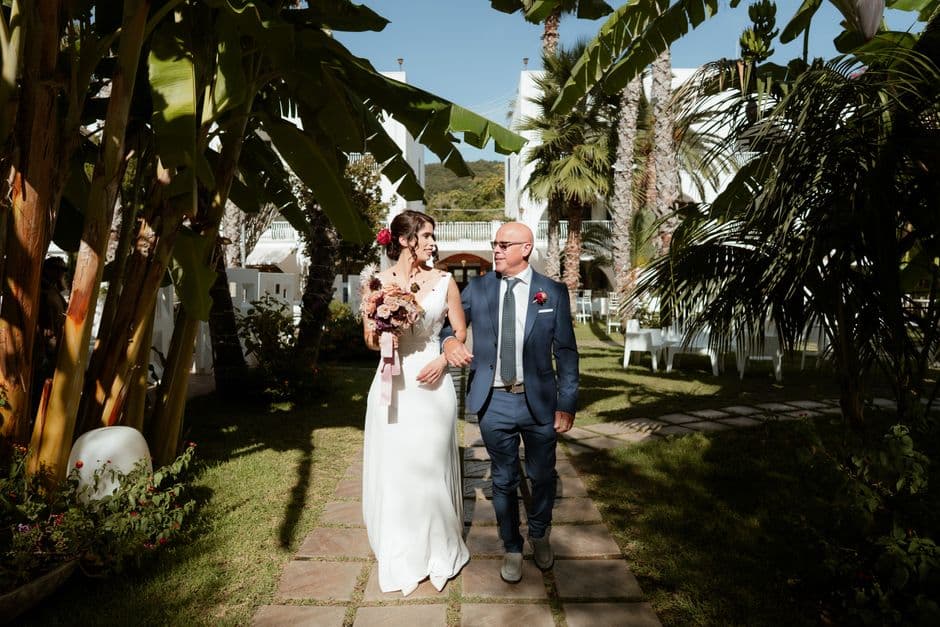
The ceremony is usually the shortest part of the wedding day, but it is the part with the most moving pieces in the least time. A rehearsal lets everyone walk through it once, ask questions and learn their cues, so the real thing feels calm. It does not need to be long or formal. Most rehearsals take 45 minutes to an hour.
When to schedule it
Most couples hold the rehearsal the day before the wedding, often right before the rehearsal dinner. Book the time with your venue early, since another event may be using the space the day before, especially on busy spring and fall weekends. If the ceremony site is not available, you can rehearse somewhere else with a similar layout, or walk through it the morning of the wedding.
If you are getting married outdoors, rehearse at about the same time of day as the ceremony if you can. You will see where the sun falls, how far voices carry and where guests will stand in the shade.
Who should be there
- The couple and the officiant
- Everyone in the wedding party, including flower girls and ring bearers
- Anyone walking in the processional, such as parents and grandparents
- Readers and anyone performing during the ceremony
- Ushers, so they know where to seat guests and family
- Your planner or day-of coordinator
- Musicians or the DJ, if possible, or at least a phone call to walk through the cues
Who leads it
Decide ahead of time who is in charge so the rehearsal does not turn into a group discussion. At many venues and places of worship, the officiant or the venue's coordinator runs the rehearsal. Otherwise, your planner or day-of coordinator usually leads it. Ask your officiant and venue whether a rehearsal is included and how long they can stay, since some charge for extra time.
What to practice
Work through the ceremony in order, then run it again from the top at full speed:
- Seating of family: who is seated, by whom, and in which rows.
- The processional: the order of the wedding party, how far apart they walk, and where each person stands at the front.
- The entrance: who walks with whom, and where they stop and hand off.
- The ceremony itself: where readers stand, when rings are passed, and any unity ritual or signing. Many officiants will skip the full words of the ceremony and just point out the transitions.
- The recessional: the order everyone leaves in, and where they go next, such as straight to family photos.
Get the cues right
Most ceremony hiccups come from a missed cue rather than a missed step. Write a simple running order with each moment, who moves and what signals it, and give a copy to your officiant, coordinator, musicians and photographer. Decide who tells the music to start the processional and how it will know the last person has reached the front. Our ceremony music guide covers how to plan those musical cues.
Tips for children in the wedding party
- Have them walk the aisle more than once so the route feels familiar.
- Seat a parent near the front so the children can sit with them once they arrive.
- Use a fake ring or a pillow with the rings sewn on, and give the real rings to a trusted adult.
- Have a plan if they decide not to walk. That is normal and guests will love it anyway.
What to bring
- A printed copy of the running order and the processional list
- Practice bouquets, such as ribbons or bows from a shower, so people know what to do with their hands
- The marriage license, if your officiant wants to review it. Our marriage license guide explains the basics.
- Items you are leaving at the venue, such as unity ceremony supplies, signs or programs, if the venue allows drop-off
- Any vendor payments or tips you want to hand to someone to deliver on the day
Weather and a backup plan
If your ceremony is outdoors, walk through the rain plan as well. Make sure everyone knows where the backup location is and how the processional changes in a smaller space. Our guide to outdoor weddings in heat, humidity and storms has more on planning for North Carolina weather.
Keep it short and kind
Thank everyone for coming, keep things moving, and save speeches and toasts for dinner. When the run-through is done, add the final timing to your wedding day timeline and share it with your vendors. If you would like someone to run the rehearsal and the ceremony for you, you can browse planners and day-of coordinators, find an officiant, or search the directory by city.